
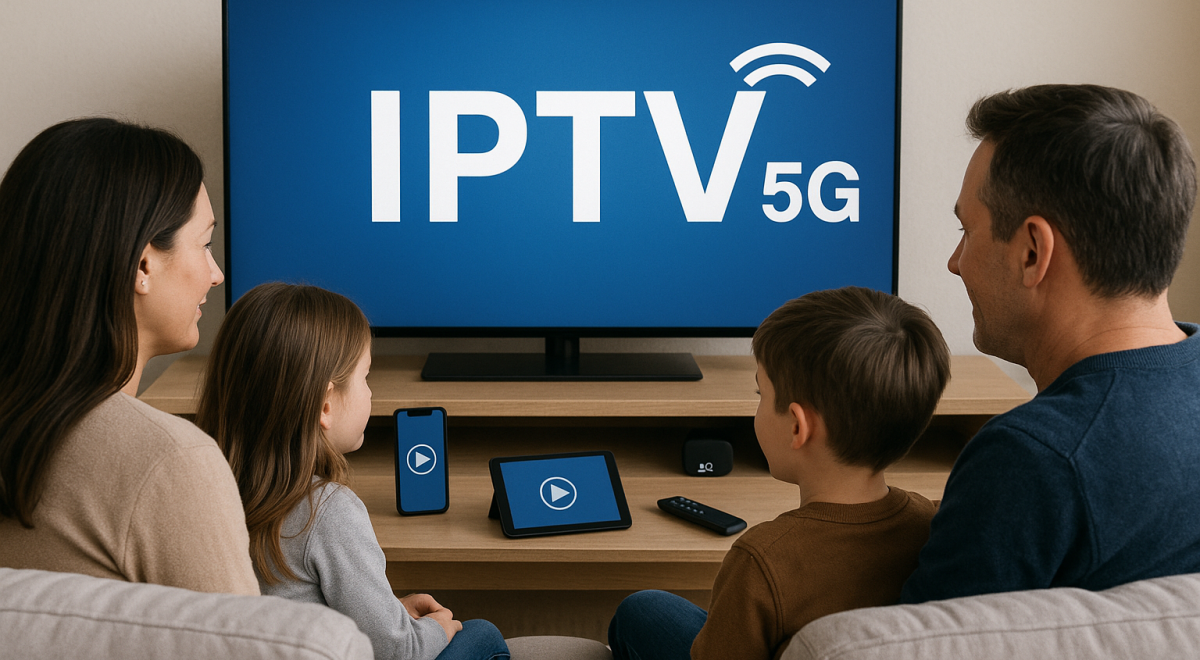
The streaming wars are no longer just about content — they’re about how that content reaches viewers. In the US, the shift to Internet Protocol Television (IPTV) has been dramatic, and two technological powerhouses are accelerating that transformation: 5G connectivity and advanced video codecs. These innovations are quietly reshaping how people watch TV, from the speed at which shows load to the resolution on their screens.
The Rise of 5G and Its Impact on Streaming
5G, the fifth generation of mobile networks, brings download speeds up to 10 gigabits per second — around 10 to 100 times faster than typical 4G LTE connections. But it’s not just speed that matters: 5G also offers ultra-low latency (as low as 1 millisecond) and the ability to support massive numbers of connected devices at once.
For IPTV users, this means:
Instant playback: Less buffering, even during peak viewing hours.
Mobility without compromise: High-quality streaming while on the go, without drops in resolution or endless loading wheels.
Better multi-device performance: Smooth streams on phones, smart TVs, tablets, and game consoles simultaneously, without choking the network.
As more US internet providers roll out mid-band and millimeter wave 5G nationwide, IPTV services are seeing adoption surge, particularly among younger, mobile-first viewers who expect to stream anywhere.
Advanced Codecs: Getting More from Every Megabit
Even with faster networks, video files are enormous. This is where codecs (compression–decompression algorithms) come in. They shrink video files without noticeable loss of quality. Traditional IPTV platforms relied on H.264 (AVC), but newer codecs like H.265 (HEVC), AV1, and VVC (H.266) are stepping in as game-changers.
Here’s how they change the experience:
Higher resolutions at lower bitrates: HEVC and AV1 can deliver 4K content using roughly half the data of H.264.
Smoother streams on slower connections: Even viewers on weaker Wi-Fi can get HD quality with fewer hiccups.
Lower delivery costs: Smaller file sizes mean less bandwidth consumed, which reduces infrastructure costs for IPTV providers.
This combination of efficiency and quality makes it possible to stream crisp ultra-HD video to users across the country, even in rural or bandwidth-constrained areas, especially as 5G reaches those places.
The Perfect Pairing: Why 5G and Modern Codecs Matter Together
5G and modern codecs don’t just improve IPTV on their own — they multiply each other’s impact.
Faster networks let providers push higher bitrates, while better codecs make those higher resolutions practical without breaking data caps or swamping servers. This synergy lets IPTV platforms:
Offer 8K streams and immersive formats like HDR and 360° video.
Deliver live content with broadcast-level reliability and minimal delay.
Provide personalized adaptive streaming, instantly adjusting video quality in real time without viewers noticing.
For users, this translates to something deceptively simple: smooth, beautiful, instant TV. No stuttering, no buffering, just a seamless experience that feels like magic — but is really math and radio waves working in harmony.
What It Means for the Future of IPTV
The convergence of 5G and advanced codecs marks a pivotal shift in US streaming. Viewers will increasingly expect broadcast-quality IPTV anywhere, anytime. Providers that embrace these technologies stand to offer richer features (like 8K live sports or cloud DVR with zero delay) while cutting their delivery costs.
As competition intensifies, these innovations won’t just be a technical advantage — they’ll be the difference between being watched or being forgotten.
FAQs
Q1: What is IPTV?
IPTV (Internet Protocol Television) delivers television content over the internet instead of through traditional cable or satellite signals. It includes live TV, video on demand, and time-shifted media.
Q2: How does 5G improve IPTV streaming?
5G offers faster speeds and lower latency, which reduces buffering and allows high-quality video streaming on mobile devices and smart TVs, even during peak usage times.
Q3: What are video codecs, and why do they matter?
Codecs compress and decompress video data. Advanced codecs like H.265 (HEVC) and AV1 let IPTV providers send higher-quality video using less data, improving streaming quality while reducing bandwidth costs.
Q4: Can I watch 4K or 8K content on IPTV without 5G?
Yes, but you’ll need a strong wired or Wi-Fi connection. 5G simply makes it more reliable to stream ultra-HD content on mobile devices and in areas with weaker traditional internet infrastructure.
Q5: Will these technologies reduce streaming costs for users?
Indirectly, yes. As IPTV providers save on bandwidth and infrastructure costs through efficient codecs and faster networks, they can offer more competitive pricing or richer features.
